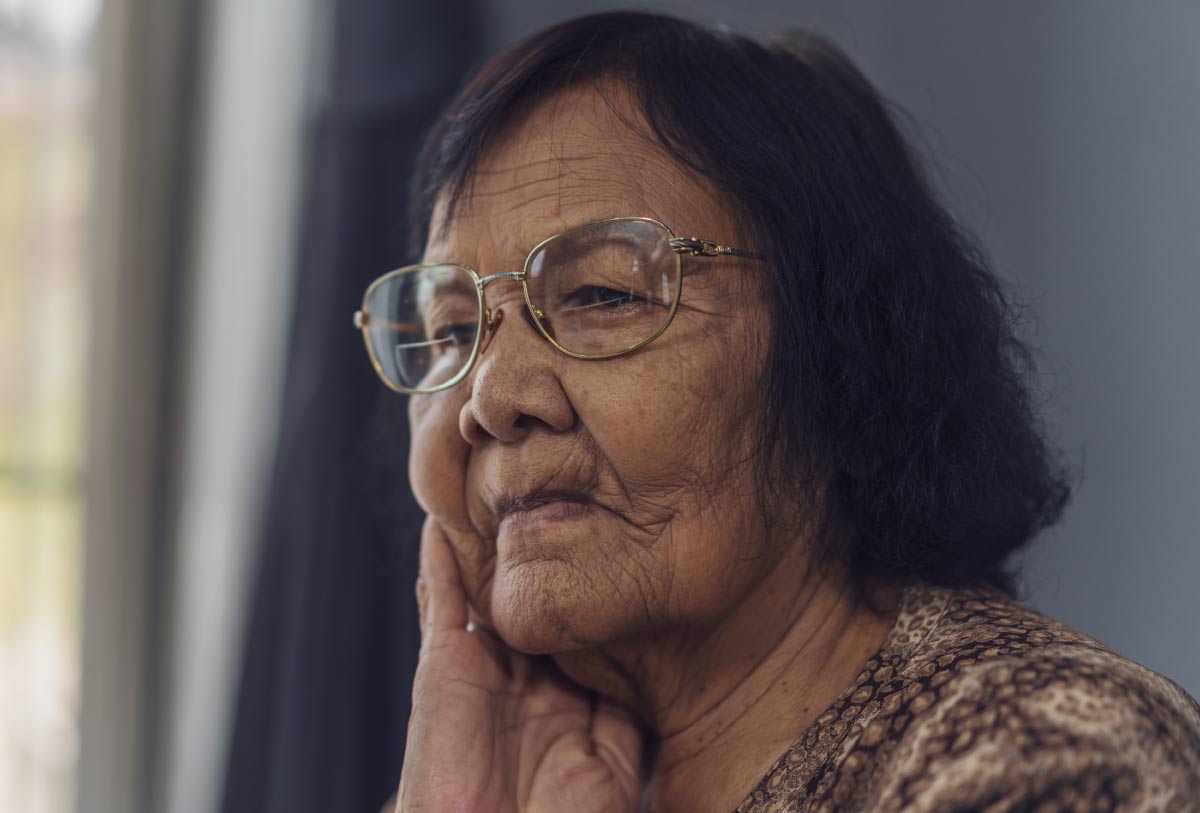
As we age, our world can sometimes become smaller.
Not necessarily because we want it to. Not because we have stopped caring about other people. And certainly not because community, friendship or family no longer matter.
Sometimes, our world becomes smaller because the things that once connected us to other people gradually become harder to access.
A spouse or partner dies. Friends pass away. Family members move farther away. Retirement ends decades of workplace relationships and familiar routines. Driving becomes difficult or no longer feels safe. Mobility changes. Hearing or vision loss can make conversations and unfamiliar environments more challenging. Money becomes tighter. A person moves later in life and leaves behind a familiar neighbourhood. Transportation is limited. Chronic illness takes more energy and time.
For some people, these changes happen one at a time. For others, they begin happening at the same time.
And that distinction matters.
Social isolation is rarely the result of one thing. It is often the result of circumstances accumulating over time.
The Government of Canada estimates that approximately 30% of Canadian seniors are at risk of becoming socially isolated. Statistics Canada reported that almost one in five Canadians aged 65 and older experienced loneliness in 2019 and 2020. The difference by income was particularly significant: 25% of seniors in the lowest income group reported loneliness, compared with 15% in the highest income group.
These numbers tell us something important.
Social isolation and loneliness are not simply personal issues. They can be connected to income, health, transportation, housing, mobility, family circumstances, community access and the opportunities a person has had to remain connected throughout their life.
And behind every statistic is a person whose world may have gradually become smaller.
Sometimes the most important question isn't simply, "Is this senior lonely?"
It is:
"Who is still connected enough to notice when something changes?"
There is sometimes an assumption that a senior who doesn't get out very much simply needs to be more social. They should join a club, attend more activities, make more friends, or get out of the house.
But this way of thinking can be unfair because it places responsibility entirely on the individual without considering what may have happened around them.
A senior may desperately want to maintain their relationships but no longer have an easy way to reach them. Their children may live in another city. Their closest friend may have died. They may have stopped driving. Their mobility may have declined. Their income may make transportation or activities difficult to afford. They may have moved away from the neighbourhood they knew for decades. Hearing loss may make group conversations exhausting, while vision changes can make unfamiliar places uncomfortable. A chronic illness may simply take more energy than it once did.
None of these circumstances should be dismissed as a personal failing.
Social isolation should not be reduced to whether someone is "social enough."
Government of Canada research identifies circumstances such as living alone, low income, compromised health, limited transportation, changing family structures, retirement, the death of a spouse, and losing a driver's licence among factors that can increase the risk of social isolation. Importantly, research also recognizes that the greater the number of risk factors, the greater the potential risk of isolation.
What may look from the outside like a senior "choosing to stay home" may actually be the result of years of circumstances gradually making the outside world harder to reach.
Not every senior wants a large social circle.
Some people have always been more introverted, private, or selective about the people they allow into their lives. They may genuinely prefer quiet environments, one-on-one conversations and a small number of close relationships.
They may not enjoy large groups or want a different social activity every day. They may prefer a quiet afternoon at home, a phone call with a lifelong friend, coffee with a neighbour or time spent with someone they know and trust.
That does not mean they are lonely.
A small social circle can be a very meaningful social circle.
For a more introverted senior, two or three trusted relationships may provide more companionship, emotional security and belonging than being surrounded by dozens of acquaintances.
The important question isn't necessarily "How many people are in this person's life?"
It is:
"Does this person have meaningful relationships with people they feel safe with, trust, and genuinely want to spend time with?"
Connection is personal. One senior may feel connected through a weekly community program, while another may prefer regular visits with a neighbour. Someone else may rely on phone or video calls with family. Another may be happiest spending considerable time alone while maintaining one or two deeply meaningful friendships.
We should not measure connection by the size of someone's social calendar.
There is an important difference between choosing solitude and losing access to connection.
A senior may genuinely enjoy reading, gardening, watching a favourite program, working on a hobby, or simply enjoying the quiet of home. Time alone can be restorative and meaningful.
The concern arises when someone who values certain relationships begins losing the ability to maintain them.
A more introverted senior may not want ten new friends. They may simply want to keep the one or two close friendships they already have. If transportation, mobility, finances, hearing loss, or relocation make those relationships increasingly difficult to maintain, their small social circle can become vulnerable, not because it is too small, but because there are fewer connections available when one is lost.
Social isolation rarely arrives all at once. More often, circumstances begin to layer on top of one another.
Imagine a senior who has lived independently for many years. They have always been somewhat private and have never needed a large social circle. They have a few close friends, a familiar neighbourhood, and a daily routine that works well.
Then their spouse dies.
The person who was their closest companion is suddenly gone. A year or two later, a close friend passes away. Another moves away to be closer to family. Their adult children live several hours away and can only visit occasionally.
The senior retires and loses the everyday relationships that came from work, the familiar faces, conversations, routines, and sense of purpose that had been part of life for decades.
Then driving becomes increasingly difficult. At first, they stop driving at night. Later, they avoid longer distances. Eventually, they give up driving altogether.
Places they once reached easily now require someone else to drive them, public transportation, or another form of assistance.
Their mobility begins to decline. Walking longer distances becomes tiring. Stairs become harder. Getting around a large grocery store becomes exhausting. Hearing loss makes group conversations difficult to follow, while vision changes make unfamiliar places less comfortable. A chronic illness takes more energy and requires regular appointments.
At the same time, transportation in the community may be limited, and the senior may be living on a fixed or low income, making taxis, activities, and other transportation difficult to afford.
None of these circumstances alone necessarily means the person will become socially isolated.
But together, they can dramatically reduce opportunities for connection.
This is why social isolation should not be treated as a simple checklist.
Living alone may be perfectly manageable when someone drives, has good mobility, adequate income, and friends nearby. Losing the ability to drive may be manageable when family members live close by. Hearing loss may be less difficult when someone has regular one-on-one contact with people who know them well.
But when widowhood, loss of friendships, retirement, declining mobility, hearing or vision changes, limited transportation and financial pressure begin occurring together, the impact can be very different.
One barrier can make the next barrier harder to overcome.
Government of Canada research describes this cumulative effect, noting that some risk factors may be episodic, such as the death of a spouse or loss of a driver's licence, while others may be ongoing, such as chronic health concerns. As risk factors accumulate, the potential for social isolation increases.
There is another part of social isolation that deserves much more attention.
Some seniors experienced exclusion long before they became seniors.
The barriers affecting someone's social connections today may have roots that go back decades. A person's experiences can shape where they felt welcome, who they learned to trust, whether they feel safe asking for help, and whether they believe services were designed with people like them in mind.
Aging does not erase that history.
This matters particularly when we talk about older immigrant and refugee seniors, Indigenous older adults and LGBTQ+ seniors.
For older immigrant and refugee seniors, aging can involve a complicated mixture of adjustment, loss and rebuilding.
A person may have spent much of their life building a new home and community while still carrying strong connections to the place and culture they came from. As they age, family members may move away, friends may pass away, and cultural communities may become smaller or harder to access.
Language can become another barrier, particularly when navigating healthcare, housing, transportation or social services. A senior may know that assistance exists but struggle to understand how to access it or communicate their needs. They may experience racism or discrimination, have fewer financial resources or encounter services that technically exist for seniors but were not designed around their language, culture, traditions or lived experiences.
Canadian government research identifies language difficulties, cultural differences, racism, discrimination, reduced socioeconomic status and limited culturally appropriate services among factors that can contribute to social isolation for immigrant and refugee seniors.
This creates an important distinction:
A service can exist without feeling accessible.
A program may be available, but a senior may not feel comfortable attending. A service may be open to everyone, but the person may struggle to communicate, navigate the system, or feel that they belong there.
The question isn't simply, "Why aren't they using the services available?"
It is:
"What has made those services difficult to access, understand or trust?"
The same principle is particularly important when considering Indigenous older adults.
A person's willingness to engage with institutions cannot be separated from their experiences with those institutions.
Racism, colonial systems, cultural erasure and previous harmful encounters with health and social services can influence whether an older person feels safe seeking assistance. Government of Canada research on social isolation among Indigenous seniors identifies the suppression of Indigenous language and culture, racism and historical experiences as important factors in understanding isolation and connection.
For some Indigenous older adults, caution around institutions may not be a reluctance to receive help.
It may be a response to lived experience.
That experience can influence whether someone trusts a service provider, seeks healthcare, accepts home support, or feels comfortable allowing an unfamiliar person into their home.
Trust is not a minor detail in care. Trust is part of access to care.
Meaningful support therefore requires more than offering a service. It requires creating an environment where the person feels respected, heard, culturally safe, and in control of their choices.
The same principle applies to LGBTQ+ seniors.
Many older LGBTQ+ adults lived significant portions of their lives during periods when being openly gay, lesbian, bisexual or transgender could carry serious social, professional, family and personal consequences.
Some experienced discrimination. Some lost relationships. Some faced workplace consequences. Some learned that being open about who they were could make them vulnerable.
For some, safety meant keeping part of themselves private.
Those experiences do not disappear simply because someone reaches retirement age.
Canadian research has identified discrimination, concerns about discrimination, reduced social networks and barriers to accessing appropriate services among issues affecting LGBTQ+ older adults.
An older LGBTQ+ adult may therefore approach a new service provider with questions that are not immediately visible:
Will I be respected here? Will my partner be recognized? Will I be treated differently? Is it safe to be myself?
These are not unreasonable questions for someone whose lifetime may include experiences when openness was not always safe.
Accepting support is an act of trust.
A person isn't simply accepting a service. They may be allowing another person into their home, their routines, and their personal space. Sometimes they are allowing someone into deeply private parts of their life.
That is why we cannot simply say, "The service is available. Why don't they use it?"
We have to understand that people's histories influence how they respond to institutions, healthcare, community organizations and support services.
Aging does not erase someone's history.
It does not erase racism, cultural loss, discrimination, institutional harm, or the years when someone learned that being open about who they were could carry consequences.
It also does not erase the need to feel safe and respected.
This brings us to one of the most important questions about aging independently.
What happens when nobody regularly knows you well enough to notice that something has changed?
Who notices that you haven't eaten properly? Who notices that you're suddenly moving differently? Who notices that you're confused today when you normally aren't? Who notices that the laundry hasn't been touched, the curtains haven't been opened, or the mail is piling up?
Who notices that something in the home doesn't look right?
Who notices that you don't seem like yourself?
And perhaps most importantly:
Who knows what "yourself" normally looks like?
For a senior with a strong network of family, friends and neighbours, several people may naturally notice these changes. But what happens when family lives far away, friends have passed away, mobility makes visits less frequent, and the person has stopped attending the activities where people used to see them?
This is where home support can play a meaningful role.
Not because a support worker replaces family. Not because paid home support can solve loneliness. And not because home support should become a substitute for community.
Home support can be a bridge to connection.
When we talk about home support, we often focus on the tasks.
A worker may come into someone's home to prepare a meal, do laundry, change bedding, pick up groceries, help with household routines, assist with personal care, or provide respite for a family caregiver.
These practical tasks matter. They can help a person remain safely and comfortably at home.
But something else can happen during those hours.
There is conversation. There is familiarity. There is someone asking, "How has your week been?"
There is someone who remembers the grandchildren's names, knows how the person takes their tea, or notices the photograph on the wall and hears the story behind it.
Someone may remember that the person loves gardening. They may notice that the senior seems quieter than usual. And when support is consistent, there is something particularly valuable:
Someone begins to know that person's baseline.
They learn how that person normally moves, communicates, eats, and interacts. They begin to recognize what "not quite themselves" looks like.
The value of home support cannot always be measured by the tasks completed.
For an isolated senior, two hours of support might mean two hours of assistance.
But it can also mean:
Another human being came through the door that day.
There is something powerful about being known.
Not watched. Not monitored. Not treated as a list of tasks.
Known.
Someone remembers that you like your tea a certain way. Someone knows your daughter is visiting next weekend. Someone remembers the job you once had. Someone recognizes the photograph on the shelf. Someone notices when you're having a difficult day.
These interactions may seem small, but for someone whose social world has become increasingly limited, they can be meaningful.
They remind a person that they are still part of a relationship and still a person with stories, preferences, experiences, and a life beyond their care needs.
This is one reason consistency can matter so much in home support. Familiarity can make support feel less like a series of transactions and more like a trusted relationship.
This is where home support becomes broader than completing household tasks.
Home support can be a bridge between a person and the life beyond their front door.
A support worker might help someone get ready for a community program, take a walk, shop for groceries, or reconnect with an activity they have stopped doing. They might help a senior navigate technology so they can communicate with family or video call their grandchildren.
Sometimes practical assistance gives a person something just as important as the task itself:
the energy, confidence, and stability to participate in their own life.
The worker is not the destination.
The connection is.
The purpose is not to create dependence on the worker. It is to support the person's ability to maintain relationships, routines, interests and participation beyond the support visit.
This broader view of home care is closely aligned with the More At Home Society's mission of helping eligible BC seniors access home care so they can remain safely and independently in their own homes and communities, with dignity and choice. More At Home provides financial assistance to eligible seniors who need home care but may not be able to afford private support.
This distinction is important.
Home support is not the answer to loneliness by itself.
A support worker cannot replace a spouse, child, sibling, friend, neighbour or community. They should not have to.
The role of home support is different. It can provide practical assistance and human connection while helping a person remain connected to the wider network of people and places that give their life meaning.
It can help preserve routines, provide stability during periods of change, and make participation possible again.
Perhaps the senior has enough energy to call their daughter. Perhaps they can get dressed and attend a community program. Perhaps they have the confidence to go grocery shopping or continue living in the neighbourhood they love.
Perhaps a family caregiver gets a few hours to rest and return to the relationship rather than spending every visit completing care tasks.
The practical support creates space for life to continue.
The goal should never be to force socialization.
A senior should not be pressured into joining activities they don't enjoy simply because someone has decided they need to be "more social."
The more introverted senior may prefer one trusted friend. An immigrant senior may feel most connected within their cultural community. An Indigenous Elder may find connection through family, culture, language, and community. An LGBTQ+ senior may value spaces where they can be themselves without fear of discrimination. Another senior may genuinely enjoy a busy calendar filled with activities.
All of these forms of connection are valid.
The goal is to preserve choice, belonging, and connection on the person's own terms.
Connection should not become another obligation imposed on an older person. It should support who they are.
It is important not to reduce social isolation to simply feeling lonely or sad.
Loneliness is an emotional experience. Social isolation describes a broader lack or loss of social contact, participation, and mutually rewarding relationships. The two can occur together, but they are not the same.
A person can feel lonely while surrounded by people, while another person can spend considerable time alone and feel completely content.
The concern arises when a person loses meaningful connections or opportunities for participation that they value.
And prolonged social isolation can have serious consequences. Canadian public health research associates social isolation with poorer physical and mental health, increased emotional distress and depression, more falls, greater use of health and support services, reduced quality of life and premature death.
Social isolation can also contribute to a cycle in which a person becomes less active, less confident and less connected over time. Less contact can mean fewer opportunities. Fewer opportunities can make withdrawal easier. Withdrawal can make reconnecting more difficult.
This is why maintaining connection is not simply about making someone happier.
Connection can be part of maintaining health, independence, and quality of life.
Aging in place is often described as remaining safely and independently in one's own home.
But independence should mean more than remaining physically inside four walls.
A person can have a clean home, nutritious meals, and assistance with personal care and still experience a life that has become painfully small.
True independence also involves having choices, relationships, purpose, identity, community and the ability to participate in the things that matter.
This is why home support should be viewed through a wider lens.
It is practical assistance.
But it can also be human connection.
It can provide familiarity and stability. It can help someone maintain routines. It can help someone recognize when something has changed. And importantly, it can create a bridge to the relationships, activities, and community beyond the home.
For More At Home Society, this fits directly within the broader goal of helping BC seniors maintain dignity, independence and choice while remaining in their homes and communities.
Aging naturally brings change.
We lose people we love. Friends move. Families change. Work ends. Homes and neighbourhoods change. Our bodies change. Transportation becomes more difficult.
Some of these changes cannot be prevented.
And some barriers may have been present long before a person ever became a senior.
A person's history matters. Their experiences with family, community, healthcare, government, workplaces, and other institutions can shape how they approach relationships and services later in life.
Aging does not erase someone's history.
That is why meaningful support must begin with listening rather than assumptions.
We cannot simply tell someone to "get out more" without understanding what has made getting out difficult. We cannot assume that a senior with a small social circle is lonely. We cannot assume that someone who doesn't use a service doesn't need it. And we cannot assume that a service is accessible simply because it exists.
Sometimes the first step toward connection is not another social program.
Sometimes it is trust.
Sometimes it is a familiar face. Sometimes it is culturally appropriate support. Sometimes it is transportation. Sometimes it is help with a few household tasks. Sometimes it is simply having someone take the time to listen.
And sometimes, it is having someone who knows you well enough to notice when something has changed.
For a senior whose world has gradually contracted, home support can help create that bridge.
A meal prepared. Laundry completed. Groceries brought home. A bed changed. A caregiver given a few hours of respite.
But alongside those practical things, there can also be a conversation, a familiar face, a trusted relationship, a question about the grandchildren, a remembered story or a notice that something isn't quite right.
There may be an opportunity to regain confidence, a little more energy to participate and a little more independence to reconnect.
That is the broader value of home support.
It is not a replacement for family. It is not a replacement for friendship. It is not a replacement for community.
It is a bridge that can help a person remain connected to all of them.
Because the goal is not to make every senior more social. The goal is not to fill their calendar. The goal is not to decide what connection should look like for them.
The goal is to preserve choice, belonging, and connection on their own terms.
Supporting someone to remain at home is not only about meals, housekeeping, personal care or daily routines.
It is about helping people remain connected to their identity, relationships, culture, community, independence and the parts of life that continue to make them feel like themselves.
Sometimes, keeping someone's world from becoming smaller begins with something very simple:
Someone comes through the door.
For a little while, that person is not just completing a task. They are connecting with another human being.
That connection may be brief. It may not replace the relationships the person has lost. It may not solve every barrier they face.
But it can be a beginning.
A bridge.
A reminder that independence does not have to mean doing everything alone.
And that aging at home should never mean disappearing from the world around you.
Connection is not an extra. It is part of living well.



A practical guide to building structure, purpose, and joy into your retirement lifestyle
Winter has a way of slowing everything down. As the days grow shorter and routines shift indoors, many of us find ourselves searching for simple ways to stay energized, connected, and uplifted during the colder months.
Your donation helps provide essential home care, making it possible for local seniors to age with dignity and comfort.


